
Home
 About Dr. Antell
 Procedures
 Media
 Our Office
 FAQs
 Before & After Photos
 Testimonials
 News & Research
 Links
 Patient Registration
 Contact Us


  You are here:  Cosmetic and Plastic Surgery Procedures >Skin Cancer   

Plastic Surgery Procedure: Skin Cancer  

Skin cancer is the most common form of cancer in the United States. More than 500,000 new cases are reported each year - and the incidence is rising faster than any other type of cancer. Anyone can get skin cancer - no matter what your skin type, race or age, no matter where you live or what you do. Though skin cancers can be found on any part of the body, 80 percent appear on the face, head or neck, where they may be disfiguring as well as dangerous.

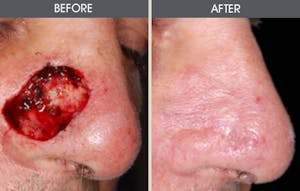
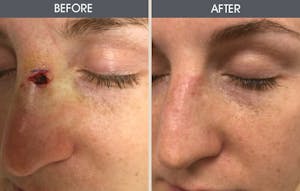
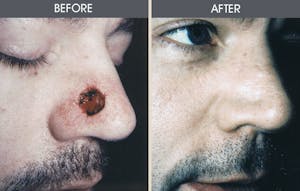
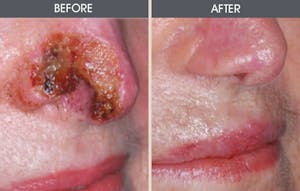
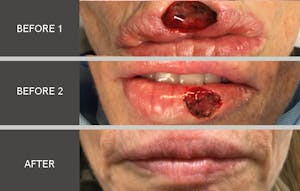
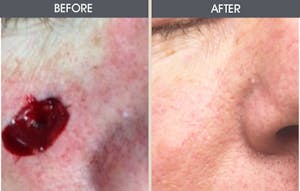
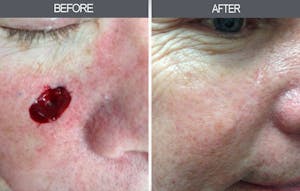
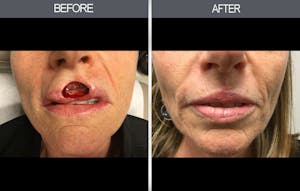
Fortunately, most skin cancers can be removed by plastic surgeons. If the cancer is small, the procedure usually can be performed quickly and easily in your doctor's office or in an outpatient facility. In many cases, the resulting scar will be barely visible, or will be concealed within the natural folds and contours of your face.

Cancer of any sort is frightening to most patients, but when it carries with it the possibility of scarring and disfiguration, the patient is apt to be particularly apprehensive and even depressed. Cure is the primary goal of treatment for any skin cancer, but all parties to the treatment planning should be sensitive to the patient's desire to emerge with an appearance that is as aesthetically appealing as possible. Early consultation with a knowledgeable plastic surgeon makes good sense even if the primary care physician utlimately undertakes the treatment. Together the primary care physician and the plastic surgeon can develop appropriate options for the patient to consider.

Epidemiology and Etiology of Skin Cancer

Cancer of the skin is generally divided into two broad categories: melanoma and nonmelanoma cancers. Nonmelanoma cancers account for about 80 percent of skin malignancies. The most common nonmelanoma cancers are BCC and SCC, but other tumors of sweat glands, hair follicles, or virtually any other structure of the skin may also be included.

Some estimates suggest that up to half of all Americans who reach the age of 65 will have some type of skin cancer at least once. The lifetime probability of developing a skin malignancy varies by sex, geographic area of residence and cancer type. Risk factors for cancer of the skin include:

  • exposure to ultraviolet radiation (this includes tanning beds and tanning lamps, as well as sunlight)
  • residence in so-called "sunbelt" areas, i.e., latitudes closer to the equator
  • dysplastic nevi
  • family history/genetic anomalies
  • history of severe sunburn
  • fair skin
  • history of x-ray or radiation burns
  • occupational exposure to coal tar, pitch, creosote, arsenic compounds, or radium
  • immunocompromised status

Exposure to ultraviolet radiation from the sun is a major risk factor for all the principal types of skin cancer. Persons at greatest risk are those with fair skin, light hair, light eyes and the genetic phenotype most susceptible to sunburn. Living closer to the equator increases the risk, as does participation in outdoor activities. However, the specific risk varies with the type of cancer.

Epidemiologic data suggest that the risk of developing MM is specifically related to the amount and intensity of sun exposure during adolescence. A person who experienced three or more severe, blistering sunburns during those years has a risk of developing MM four to five times greater than that of the general population.

Individuals whose sun exposure is sporadic summertime trips to the beach for example, have a greater risk for MM, but people whose exposure to is constant, such as farmers or road-construction workers, are more at risk for BCC or SCC. Malignant tumors of all types may also develop years after x-ray or radium burns or occupational exposure to coal tar, pitch, creosote, arsenic compounds or radium.

Xeroderma pigmentosum is a rare, chronic, progressive, pigmentary and atrophic disease. It is inherited as an autosomal recessive trait involving a defect in the enzymes active in the excision and repair of DNA damaged by ultraviolet radiation. In this disease, the eyes and skin are extremely sensitive to light. Xeroderma pigmentosum begins in childhood, and early development includes a number of serious problems, among which might be melanoma, BCC or SCC. Patients with this disease have about a three-fold increased risk for developing some type of skin cancer.

African Americans and others with dark skin rarely develop skin cancer, but when it does occur, it most commonly develops under the fingernails or toenails or on the soles or palms. Risk factors include exposure to sunlight, albinism, burn scars, preexisting pigmented lesions and chronic discoid lupus erythematosus.

Although most skin cancers can be removed surgically, your specific treatment will depend on the type of cancer you have, its stage of growth and its location on your body. Skin cancer is diagnosed by removing all or part of the growth and examining its cells under a microscope. Plastic surgeons treat all of the following types of skin cancers:

[Back to top]

Basal Cell Carcinoma

Incidence
Basal cell carcinoma accounts for more than 90 percent of all skin cancers in the United States. The lifetime probability of developing BCC is 11 to 28 percent. The risk is similar for males and females when they are young, but after the age of 45, men are more likely to develop BCC than women (male/female age adjusted incidence ratio =1.6).

Areas that are exposed - the head, face and neck, arms and hands - are the most common sites for BCC, with the tumor often arising on the nose. Basal cell carcinomas are slow-growing and rarely metastasize, but they can invade or impinge upon underlying orifices (e.g., eyes, ears, mouth) or structures (e.g., bone, dura mater).

Squamous Cell Carcinoma

Incidence
There are about four cases of BCC for every one of SCC; the lifetime probability of developing SCC is 1.5 to 11 percent. Males are at greater risk for SCC throughout their lifetimes than are females (male/female age-adjusted incidence ratio = 2.8). As people age, their risk for developing SCC rises, so that overall, older people of either sex are at greater risk.

Like BCC, SCC predominates on exposed areas like the head, face, and neck, but may occur anywhere on the body. Squamous cell carcinoma arises from the malpighian cells of the epithelium.

Although there are fewer cases of SCC than BCC, the potential for metastasis is greater in SCC. About one third of mucosal or lingual lesions will have metastasized before diagnosis. An SCC may develop in normal tissue or in preexisting actinic keratosis or patch of leukoplakia.

Malignant Melanoma

Incidence and Mortality
Although it is the least common of the major skin cancers, MM is the most lethal. Malignant melanoma is the leading cause of death from diseases of the skin, and it is responsible for about 74 percent of all deaths from cutaneous cancers. The mortality rate for MM is increasing faster than that for any other cancer except lung cancer. Not unexpectedly, the incidence of the disease is rising too: at the rate of three to four percent per year. The lifetime probability of developing MM is 0.6 to two percent. If current trends continue, by the year 2000, one in 90 people will fall victim to MM during their lifetimes.

In women, the frequency of MM is second only to lung cancer. Females have a greater risk of developing MM at a younger age, while men are more likely to develop MM when they are older (male/female age-adjusted incidence ratio = 1.2). However, the overall incidence of MM increases with age, with 75 percent of cases occurring in people over the age of 40.

Risk Factors
Increased risk for developing MM is associated with the presence of dysplastic nevi. Dysplastic nevi tend to be atypical in appearance, larger than characteristic moles, and uneven in color. Dysplastic nevi are both potential precursors of MM and markers for increased risk of developing MM. The four percent of the population with dysplastic nevi have about a six percent risk of developing MM, versus one percent in the general population. For persons with dysplastic nevi and a personal or family history of MM, the risk is higher. About 100,000 people in the United States have dysplastic nevi and two family members who have had MM. For these individuals, the risk approaches 100 percent.

Other factors related to elevated risk for MM include hormonal changes during a woman's lifetime. During pregnancy, menopause and estrogen replacement therapy, a woman has a statistically greater likelihood of developing melanoma. The immunocompromised status of AIDS patients also places them at a greater risk for MM.

Although many MMs arise from pigmented moles, more than half occur in melanocytes in normal skin. Lesions most often appear on the trunk in men and on the leg in women, but MM can also occur elsewhere on the body and in mucous membranes, the eye and the central nervous system where pigmented cells occur. Melanomas vary in size, shape and color, but most are pigmented.

Malignant melanomas are seldom seen in children. Occasionally, however, MM develops in congenital nevi. All congenital nevi are predisposed toward malignant change, but the malignant potential seems to be related to size. Giant congenital nevi are more likely to develop malignancy than other smaller, congenital nevi.

[Back to top]

Your plastic surgeon can treat other types of skin growths as well, including:

Moles
These growths appear as clusters of heavily pigmented skin cells that may be flat or raised above the skin's surface. While most pose no danger, some may develop into malignant melanoma, particularly those that have mottled colors or irregular edges. Often, moles are removed for cosmetic reasons, or because they're constantly irritated from rubbing against clothing and jewelry (which can sometimes cause pre-cancerous changes).

Kerotoses
These rough red or brown patches on the skin are usually found on areas exposed to the sun. They sometimes develop into squamous cell cancer.

Kaposi's Sarcoma
Kaposi's sarcoma (KS) once occurred mainly in an indolent form in men of Italian or Jewish ancestry over the age of 60 years. Today, however, KS is the most common neoplastic process in patients with HIV. Kaposi's sarcoma appears in an aggressive, disseminated form in at least one-third of patients with AIDS.

In older men, KS usually appears first on the toes or legs as purple or brown plaques or nodules that may penetrate soft tissue or bone. In five to 10 percent of cases, there is dissemination to lymph nodes or viscera.

In patients with HIV infection, the KS lesions may be the first manifestations of AIDS. Up to 80 percent of patients with AIDS and KS lesions involving head and neck structures are asymptomatic. The first lesions appear primarily on the upper body or mucosa as slightly elevated pink or red papules. As the disease progresses, the lesions become widely disseminated in the skin, mucous membranes, lymph nodes and viscera.

Recognizing Skin Cancer

Basal and squamous cell carcinomas can vary widely in appearance. The cancer may appear as

  • a small, white or pink nodule or bump
  • it can be smooth and shiny, waxy or pitted on the surface
  • a red spot that's rough, dry, or scaly
  • a firm, red lump that may form a crust
  • a crusted group of modules
  • a sore that bleeds or doesn't heal after two to four weeks
  • or a white patch that looks like scar tissue.

Malignant melanoma is usually signaled by a change in the size, shape, or color of an existing mole, or as a new growth greater than 6mm in diameter on normal skin.

The ABCD criteria developed by the American Cancer Society provide a starting-off point for the physician and an easily remembered guideline for the patient to use in self-examination for MM.

A = Asymmetry. The shape of one side of the lesion does not match the other.
B = Border. Rather than smooth, the edges are notched, ragged or blurred.
C = Color. The color is uneven and variegated, containing some or all of these colors: blue, black, brown, tan, gray, red and white.
D = Diameter. The lesion has changed in size or has a diameter greater than 6mm across (about the size of a pencil eraser).

Other characteristics that should alert the clinician are ulceration, bleeding or any change in sensation such as itching. Any lesion that has a history of change warrants a biopsy to make a definitive diagnosis.

It is important to be aware of the features of the various types of nevi. Some that are benign closely resemble cancerous or precancerous lesions.

The most important thing to remember is: Get to know your skin and examine it regularly, from the top of your head to the soles of your feet. (Don't forget your back.) If you notice any unusual changes on any part of your body, have a doctor check it out.

[Back to top]

Diagnosis and Treatment and Reconstruction

Skin cancer is diagnosed by removing all or part of the growth and examining its cells under a microscope (biopsy). Your skin cancer can be treated by a number of methods, depending on the type of cancer, its stage of growth, and its location on your body. Today's plastic surgeon is as well-trained in the excisional techniques of cancer surgery as in reconstruction. By planning ahead for reconstruction, the plastic surgeon can design the most appropriate skin excision for tumor removal.

In certain cases, some scarring may be unavoidable, but a skilled plastic surgeon can orient the closure and place the scar in an area of transition, such as the nasolabial fold or eyelid crease, so that the scar will be less noticeable. This attention to aesthetics is important to patients, especially when the features of the face are involved.

Most skin cancers are removed surgically, by a plastic surgeon or a dermatologist. If the cancer is small, the procedure can be done quickly and easily, in an outpatient facility or the physician's office, using local anesthesia. Your plastic surgeon's goal is to remove the growth in a way that maintains function and offers the most pleasing final appearance - a consideration that may be especially important if the cancer is in a highly visible area.

The procedure may be a simple excision, which usually leaves a thin, barely visible scar. In some cases, the cancer may be removed with curettage and desiccation. In this procedure the cancer is scraped out with a sharp instrument and the area is treated with an electric current to control bleeding and to eliminate any remaining cancer cells. This leaves a slightly larger, white scar. In either case, the risks of the surgery are low. Other methods of treatment may include radiation therapy, cryosurgery (freezing the cancer cells); topical chemotherapy, in which anti-cancer drugs are applied to the skin; or Moh's surgery, a procedure in which the cancer is shaved off one layer at a time. (Moh's surgery is performed only by specially trained physicians and often requires a reconstructive procedure as follow-up.)

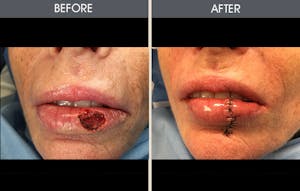
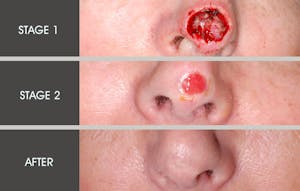
If the cancer is larger in size, or if it has spread to the lymph nodes or elsewhere in the body, more complex surgery may be required. The different techniques used in treating skin cancers can be life saving, but they may leave a patient with less than pleasing cosmetic or functional results. Depending on the location and severity of the cancer, the consequences may range from a small but unsightly scar to permanent changes in facial structures such as your nose, ear, or lip.

In such cases, no matter who performs the initial treatment, the plastic surgeon can be an important part of the treatment team. If removing the cancer leaves a cosmetic defect, your plastic surgeon can use reconstructive techniques - ranging from simple scar revision to a more complex transfer of skin and tissue - to repair damaged areas, rebuild facial structures and help restore appearance and function.

As you heal, keep in mind that a scar, however large or small, is the tradeoff for removing the cancer from your body. How quickly the scar heals depends on the size of the wound, the nature and quality of your skin and how well you care for the wound after the procedure.

Options, Concerns and Risks

All of the treatments mentioned about, when chose carefully and appropriately, have good cure rates for most basal cell and squamous cell cancers - and ever for malignant melanoma, if it's caught very early, before it's had a chance to spread.

You should discuss these choices thoroughly with your doctor before beginning treatment.

  • Find out which options are available to you
  • How effective they're likely to be for you particular cancer
  • The possible risks and side effects
  • Who can be perform them
  • And the aesthetic and functional results you can expect.

If you have any doubts about the outcome, get a second opinion from a plastic surgeon before you begin treatment.

One of the most important parts of your consultation is the discussion that you and your surgeon will have about the possible complications associated with your cancer-removal surgery.

By carefully following your doctor's instructions - both before and after your treatment - you can do your part to minimize some of the risk.

Preventing a Recurrence

After you've been treated for skin cancer, you will return to your plastic surgeon's office for regular follow-up visits to make sure the cancer hasn't recurred. It's important to keep these appointments so that your surgeon can assess your long-term results and address any questions or concerns you may have. In the meantime, it's up to you to reduce your risk of skin cancer recurrence by taking the following precautions.

  • Avoid prolonged exposure to the sun, especially between 10a.m. and 2 p.m. and during the summer months. Remember, ultraviolet rays pass right through water and clouds, and reflect off sand and snow.
  • When you do go out for an extended period of time, wear protective clothing such as wide-brimmed hats and long sleeves.
  • On any exposed skin, use a sunscreen with an SPF (sun protection factor) of at least 15. Apply it liberally, about an hour before you go out, and reapply it frequently, especially after you've been swimming or sweating.
  • Finally, examine your skin regularly. If you find anything suspicious, consult a plastic surgeon or dermatologist as soon as possible.

Below are links to answers to some of the most frequently asked questions about skin cancer.

*

What types of skin cancers can be removed by plastic surgeons?

*

What should I expect from the consultation?

*

How is skin cancer removed?

*

What should I know about the safety of skin cancer removal?

*

What can I do to prepare for the skin cancer removal procedure?

*

How will I be cared for on the day of my skin cancer removal procedure?

*

How will I look and feel right after skin cancer removal surgery?

* What should I know about my results?
* How long will I continue to see my plastic surgeon?

What types of skin cancer can beremoved by plastic surgery?

Although most skin cancers can be removed surgically, your specific treatment will depend on the type of cancer you have, its stage of growth and its location on your body. Plastic surgeons treat all of the following types of skin cancers:

Basal cell carcinoma - This is the most common and least dangerous form of skin cancer. It tends to grow slowly and rarely spreads beyond its original site.

Squamous cell carcinoma - This is the second-most-common type of skin cancer. Squamous cell carcinoma frequently appears on the lips, face or ears. It sometimes spreads to distant sites, including the lymph nodes and the internal organs.

Malignant melanoma - This is the least common, and the most dangerous form of skin cancer. If discovered early enough, it can be completely cured. If it's not treated quickly, however, malignant melanoma may spread through the body and become life threatening.

Your plastic surgeon can also treat other types of skin growths as well, including:

Moles - These growths appear as clusters of heavily pigmented skin cells that may be flat or raised about the skin's surface. While most pose no danger some may develop into malignant melanoma, particularly those that have mottled colors or irregular edges.

What should I expect from the consultation?

A personal consultation is the first step for every patient who either has been diagnosed with skin cancer or who suspects that he or she may have it. During this meeting, your surgeon will examine your skin and evaluate your general physical health.

You should arrive at your consultation prepared to provide the complete information about:

  • previous skin cancers or other abnormal skin conditions that have been diagnosed or previously treated.
  • any family history of skin cancer or a personal history of blistering sunburn
  • medications you are taking or have taken previously, including dietary and herbal supplements
  • acne treatments you may have had as an adolescent, especially if you received therapeutic radiation treatments
  • skin allergies or facial injuries you have had and how they have been treated

During your physical examination, your plastic surgeon will evaluate the affected area. If you haven't been diagnosed, your surgeon can offer you a preliminary diagnosis based on the area's appearance.

How is skin cancer removed?

The method used to remove skin cancer largely depends on the type of skin cancer you have, its stage of growth and its location on the body. Your plastic surgeon's goal is to remove the growth in a way that maintains function and offers the most pleasing final appearance - a consideration that may be especially important if the cancer is in a highly visible area.

If the cancer is small, your surgeon may remove it with a single excision, which leaves a thin, barely visible scar. In some cases, the cancer may be removed with curettage and desiccation. In this procedure, the cancer is removed with a sharp instrument and the area is treated with an electric current to control bleeding and to eliminate any remaining cancer cells. Other methods of treatment may include radiation therapy, cryosurgery (freezing cancer cells); topical chemotherapy, in which cancer drugs are applied to the skin; or Moh's surgery, a procedure in which the cancer is shaved off one layer at a time.

If the cancer is larger in size, or if it has spread to the lymph nodes, more complex surgery may be required. If removing the cancer leaves a cosmetic defect, your plastic surgeon can use reconstructive techniques - ranging from simple scar revision to a more complex transfer of the skin and tissue - to repair damaged areas, rebuild facial structures and help restore appearance and function.

What should I know about the safety of skin cancer removal?

Each year thousands of men and women undergo skin cancer-removal surgery and experience no major complications. However, it's important for you to be informed of the risks as well as the benefits of the treatment you choose.

By carefully following your doctor's instructions - both before and after your treatment - you can do your part to minimize some of the risk.

What can I do to prepare for the skin cancer removal procedure?

Your plastic surgeon will provide you with specific instructions for the days immediately before and after your treatment. A number of points may be covered, including:

  • avoiding certain medications that may complicate recovery
  • stopping smoking for a period of time before and after your treatment
  • arranging for a ride home after your procedure
  • arranging your postoperative work and social schedule, with the understanding tht you won't be looking your best

How will I be cared for on the day of my skin cancer removal procedure?

Most small skin cancers can be removed in your doctor's office surgical suite, or in an outpatient surgery center under local anesthesia. However, if your cancer is larger or if you are having a more complex reconstructive procedure to restore a normal appearance, you may be admitted to a hospital.

For larger cancer removals or surgical repairs, you may be given general anesthesia so that you'll sleep through the entire procedure. Your doctor will recommend the best and safest anesthesia option for keeing you relaxed and comfortable.

How will I look and feel right after skin cancer removal surgery?

After your procedure, the treated area may appear slightly swollen and the scar may be red or pink in color. Of course, if you've had a more complex tissue-transfer procedure, your recovery time will be longer than if you had a simple excision. However, with any kind of cancer-removal surgery, it's important to follow your surgeon's instructions to help the treated area heal properly.

What should I know about my results after skin cancer removal surgery?

As you heal, keep in mind that a scar, however large or small, is the tradeoff for removing the cancer from your body. How quickly the scar heals depends on the size of the wound, the nature and quality of your skin and how well you care for the wound after the procedure.

How long will I continue to see my plastic surgeon?

After you've been treated for skin cancer, you will return to your plastic surgeon's office for regular follow-up visits to make sure the cancer hasn't recurred. It's important to keep these appointments so that your surgeon can assess your long-term results and address any questions or concerns you may have. In the meantime, it's up to you to reduce your risk of skin cancer recurrence by taking the following precautions:

Avoid prolonged exposure to the sun, especially between the hours of 10 a.m. and 2 p.m. and during the summer months. Remember that ultaviolet rays pass right through clouds and reflect off sand, snow and water.

When you go outdoors for an extended period of time, wear protective clothing such as wide-brimmed hats and long sleeves.

On any exposed skin, use a sunscreen with an SPF (sun-protection factor) of at least 15. Apply it about an hour before you go out an reapply it frequently, especially after you've been swimming or sweating.

Finally, examine your skin regularly. If you find anything suspicious, see your doctor as soon as possible.


If you would like to contact top New York plastic surgeon Darrick Antell, or if have any further questions about skin cancer, skin malignancies, Squamous Cell Carcinoma, Basal Cell Carcinoma, or any of our plastic surgery procedures, please use our contact form.


Home| About Dr. Antell | Procedures| Media| Our Office | FAQs | Before & After Photos
Testimonials | News | Links | Contact Us |
Site Map

American Society for Aesthetic Plastic Surgery American Society of Plastic Surgeons The American Association for Accreditation of Ambulatory Surgery Facilities (AAAASF) The Joint Commission on Accreditation of Healthcare Organizations (JCAHO)

Darrick E. Antell, M.D., F.A.C.S.
850 Park Avenue
New York, New York 10075
Phone: (212) 988-4040
Email: dea@antell-md.com

Copyright Dr. Darrick E. Antell

Disclaimer