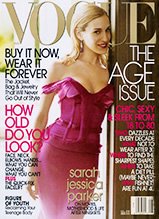
Asked for insight on the mini facelift, Dr. Antell (and that day’s patient) decided to go one-step further, allowing Vogue writer Ann Hodgman to observe the actual surgery from start to finish. He explains how the mini (or short-scar) facelift has revolutionized plastic surgery by creating a youthful, rejuvenated facial appearance with a shorter recovery and a “ponytail-friendly” result. To learn more, click the link below.
Dr. Darrick Antell is a top New York plastic surgeon who specializes in cosmetic and aesthetic surgery. He repeatedly appears on the Best Doctors Lists for Town and Country, Vogue, and New York Magazine. With a career spanning more than twenty years and ten thousand procedures, Dr. Antell combines meticulous surgical skills, advanced medical techniques, and the distinct eye of an artist.

In this issue of Esquire, NYC Plastic Surgeon Dr. Darrick Antell talks about how body sculpting can help to refine your appearance. With advances in body contouring technology leading to an increase in available options, it can be difficult to choose which body sculpting procedure is right for you. Dr. Antell explains how, in only one treatment, liposuction can benefit patients looking to slim down troublesome fat that has been resistant to diet and exercise. He also compares it with newer body-contouring advancements, such as Emsculpt and BodyTite. To read more about body contouring and body sculpting, click the link below.
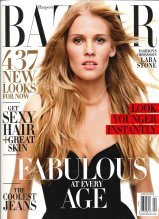
NYC Plastic Surgeon Dr. Darrick Antell was selected for Harper Bazaar’s hot list of the best beauty surgeons in the country! The surgeons mentioned in this article are “gold standard” physicians whose names are whispered at prestigious dinner parties and secretly texted to friends. Harper’s Bazaar hails Dr. Antell for his precision in face and breast surgeries and his ability to deliver beautiful, yet discreet, results to patients.
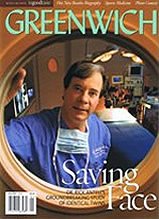
Greenwich Magazine did a feature on Dr. Antell’s remarkable study on how sun, smoking, and stress affect the aging process in twins. Click the link below to learn more about his groundbreaking research.

NYC Plastic Surgeon Dr. Darrick Antell discusses blepharoplasty (eyelid surgery) and other treatments for drooping eyelids in this issue of Esquire. Eye bags, though extremely common, can make you appear older and tired. As a result, eyelid surgery is one of the most popular plastic surgery procedures, producing a refreshed, youthful appearance. But what causes drooping eyes and under-eye bags? Dr. Antell explains how these effects are a result of both aging and genetics. Click the link below to read the full article from Esquire.

Featured in an Allure article on chin implants, NYC Plastic Surgeon Dr. Antell offered the opinion that the rise of chin implants in New York is correlated with its implications on social interactions in the corporate world. He based his statement on a research study he conducted which indicated that having a strong chin, whether resulting naturally or from a chin implant, may provide business men and women with an edge over competitors with not-so-prominent chins. Click the link below to learn more.

Looking into “who’s who” for facelifts in NYC, Vogue Magazine selected board-certified Plastic Surgeon Dr. Darrick Antell as one of New York’s Best Facelift Surgeons.
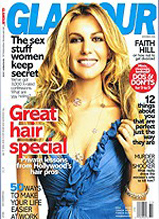
In this exclusive health bulletin edition of Glamour Magazine, Dr. Antell offers his thoughts on the most common type of cosmetic surgery: breast augmentations. Allowing the author to observe a breast implant procedure, he provided the inside scoop, answering the questions you’ve always wanted to know, but have never been told, about breast implants. To read the full article, click the link below.
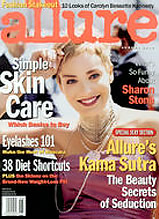
In this edition of Allure’s “Lie of the Month,” top New York Plastic Surgeon Dr. Darrick Antell discusses cellulite. Debunking common myths, he explains how cellulite is actually formed and what can be done to improve its appearance. To read more, click the link below.
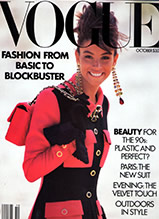
In this Vogue article entitled “Plastic Surgery and the Ideal Face,” top New York Plastic Surgeon Dr. Darrick Antell discusses his belief on how plastic surgery can help improve upon nature. After receiving a prestigious research grant to study “today’s ideal standard of beauty,” Dr. Antell measured facial proportions of the top models from Ford. To read more about changing beauty ideals, click the link below.
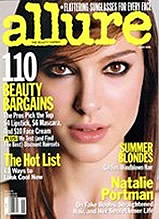
This Allure article traces twins Gwyn and Gay, who were identical until Gay’s appearance became damaged due to excessive sun exposure. After meeting New York Plastic Surgeon Dr. Darrick Antell at the annual Twins Festival in Twinsburg, Ohio, they realized how detrimental Gay’s lifestyle had been to her skin. To learn more, click the link below.

Self-conscious about her sagging breasts, Vogue writer Georgia Claremont decided to consult one of New York’s top surgeons: Dr. Darrick Antell. She documented her experience with him, from the initial appointment, to the day of surgery, and through the post-operative recovery and shares how the surgery transformed her figure to sexy and fabulous. Click the link below to read the full article.
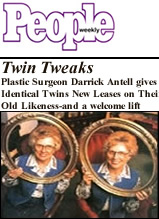
In this People article entitled “Twin Tweaks,” writers Alex Foege and Bob Stewart discuss top New York City Plastic Surgeon Dr. Darrick Antell’s work on identical twins. Aware that most identical twins prefer to look alike, Dr. Antell began offering facelifts to twins who, due to external factors, had lost some of their resemblance to each other, with the goal of returning their likeness. Supported by an anonymous benefactor, Dr. Antell was able to offer his services free to those who were selected for his study. Click the link below to read the full article.
Top NYC Plastic Surgeon Dr. Darrick Antell offers insight into how facial implants can help enhance natural features in this Elle Magazine feature. He discusses how, regardless of how much you exercise, it’s impossible to build a chin or cheekbones so, if you feel these areas fall flat, facial implants can be a good decision.

In this article for Vogue, writer Claudia Steinberg recounts the experience of facelift surgery for identical twins, Joan and Jane. Unhappy with their tired appearance, they chose Dr. Darrick Antell as their plastic surgeon due to his experience- he’s completed more operations on identical twins than anyone in the industry! To read more about their time with Dr. Antell, click the link below.
In this Vogue article entitled “Liposuction and Saddlebags,” Dr. Antell provides insight into the areas of the leg that typically have the best results after liposuction. Although not a replacement for exercise and a healthy diet, liposuction can help to improve certain areas that have stubborn, fatty deposits. To read more, click the link below.
This Marie Claire article discusses Tony, a male patient of Dr. Darrick Antell, who decided to undergo various plastic surgery procedures to enhance his look. Through liposuction, a facelift, and Botox, he’s been able to slow down the aging process, appearing much younger than his true age. To learn more, click the link below.


In this article, New York City Plastic Surgeon Dr. Darrick Antell discusses his innovative technique for the wattlectomy, a procedure developed for those who suffer from drooping or sagging neck skin, better known as the “turkey neck”. During a wattlectomy, the loose skin around the neck is directly removed to help improve neck contours and define the jawline. Compared to a traditional neck lift, a wattlectomy has a shorter recovery time, while still providing natural, youthful-looking results. To read more about the wattlectomy, click the link below.

In this article, New York City Plastic Surgeon Dr. Darrick Antell discusses his research on the difference between full-incision facelifts and short-scar facelifts. In a unique study involving four sets of twins and one set of triplets, Dr. Antell found that the full-incision technique produced more long-lasting results. Those who had the short-scar facelift were more likely to have extra neck skin or fat re-emerge, resulting in a less youthful appearance. To learn more about Dr. Antell’s groundbreaking research study, click the link below.

New York Plastic Surgeon Dr. Darrick Antell explains what you need to know about Cellfina and Kybella in this issue of Greenwich Magazine. Although both are minimally invasive treatments that can improve your appearance, they have key differences. Cellfina is an in-office procedure that addresses the fibrous bands under the surface of the skin that contribute to cellulite, while Kybella is an injectable designed to treat excess fat cells around the chin and jawline. Click the link below to read the full article from Greenwich Magazine.

Dr. Antell’s alma mater, Case Western Reserve University School of Dental Medicine, published a spotlight feature on his groundbreaking study entitled “How Environment and Lifestyle Choices Influence the Aging Process.” Featured in the Smithsonian Museum of Natural History, his research explored how various factors, including sun exposure, smoking, and stress, impact the aging process. After its time at the Smithsonian, Dr. Antell’s research was then included as part of a traveling exhibit featured in renowned museums worldwide! To read the full article, click the link below.

Dr. Antell was interviewed on his research by the Greenwich Time and featured on the front page of the Sunday paper. Using identical twins, he examined factors that influence the aging process, his work eventually being featured in one of the greatest science and technology museums in the world: the Natural History Museum of the Smithsonian Institute in Washington, D.C. Their recognition and display of his work is a great honor, as Dr. Antell may be the first and only plastic surgeon to have his research featured at the Institute. For further information, click the link below.

Dr. Antell was selected as an expert on a panel of plastic surgeons for “A Girlfriend’s Guide to Plastic Surgery” in Greenwich Magazine. These plastic surgery experts gave the 411 on recovery time, expectations, costs, and post-surgical care. Providing insight on tummy tucks, liposuction, arm lifts, and other top requested procedures, Dr. Antell answers the questions you’ve always wanted to know. To read the article, click the link below.

New York Plastic Surgeon Dr. Darrick Antell was chosen as one of the “Best Plastic Surgeons in America” in Delta’s Sky Magazine. The featured surgeon for the New York area, Dr. Antell was nominated by his peers and selected by the nation’s leading providers for this honor.

“Dr. Antell has been selected numerous times as one of New York’s Best Doctors by New York Magazine. Nominated by his peers for this annual list, Dr. Antell has been named a “Best Doctor” for cosmetic breast surgery, cosmetic face and neck surgery, liposuction, reconstructive breast surgery, and reconstructive face and jaw surgery.
“Dr. Antell has been selected numerous times as one of New York’s Best Doctors by New York Magazine. Nominated by his peers for this annual list, Dr. Antell has been named a “Best Doctor” for cosmetic breast surgery, cosmetic face and neck surgery, liposuction, reconstructive breast surgery, and reconstructive face and jaw surgery.
“Dr. Antell has been selected numerous times as one of New York’s Best Doctors by New York Magazine. Nominated by his peers for this annual list, Dr. Antell has been named a “Best Doctor” for cosmetic breast surgery, cosmetic face and neck surgery, liposuction, reconstructive breast surgery, and reconstructive face and jaw surgery.
“Dr. Antell has been selected numerous times as one of New York’s Best Doctors by New York Magazine. Nominated by his peers for this annual list, Dr. Antell has been named a “Best Doctor” for cosmetic breast surgery, cosmetic face and neck surgery, liposuction, reconstructive breast surgery, and reconstructive face and jaw surgery.

“Dr. Antell has been selected numerous times as one of New York’s Best Doctors by New York Magazine. Nominated by his peers for this annual list, Dr. Antell has been named a “Best Doctor” for cosmetic breast surgery, cosmetic face and neck surgery, liposuction, reconstructive breast surgery, and reconstructive face and jaw surgery.
“Dr. Antell has been selected numerous times as one of New York’s Best Doctors by New York Magazine. Nominated by his peers for this annual list, Dr. Antell has been named a “Best Doctor” for cosmetic breast surgery, cosmetic face and neck surgery, liposuction, reconstructive breast surgery, and reconstructive face and jaw surgery.
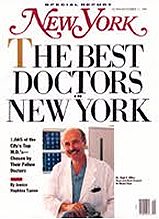
“Dr. Antell has been selected numerous times as one of New York’s Best Doctors by New York Magazine. Nominated by his peers for this annual list, Dr. Antell has been named a “Best Doctor” for cosmetic breast surgery, cosmetic face and neck surgery, liposuction, reconstructive breast surgery, and reconstructive face and jaw surgery.

Dr. Antell was included as a “Best Doctor” in a guidebook published by Castle Connolly. Physicians included in this book were selected by other doctors, nurses, and healthcare professionals for their high-level of patient care and superior results.

In this article of Town & Country, Dr. Darrick Antell discusses how to handle talking about plastic surgery in various social situations.

This Elle Magazine feature discusses how Dr. Antell, a top Manhattan Plastic Surgeon with a wood-paneled Park Avenue office and a roster of celebrity and socialite clients, went to Twinsburg to conduct research on aging. In a groundbreaking study, he investigated whether genetic or environmental factors had a larger impact on the aging process. Click the link below to read the full article.

The Best of Spring Fashion”: “In this special edition of Town & Country, Dr. Darrick Antell was selected as a “best plastic surgeon” and included in their directory of “Top Cosmetic Surgeons in the United States.

The Skin Cancer Foundation Journal published Dr. Antell’s article entitled “Secrets of a Plastic Surgeon: Saving Face after Skin Cancer”. In this paper, he discusses different reconstructive options for after skin cancer, such as natural recovery, skin grafts, and skin flaps. He also talks about the value of teamwork in reconstructive surgery, as dermatologists can choose to work with plastic surgeons to achieve minimal scarring during skin cancer treatment. Read the full article by clicking the link below.

NYC Plastic Surgeon Dr. Darrick Antell was featured in an article in Reuters entitled “Best Face Forward: Chin Implants Surge in Popularity”, which discusses the newest trend in plastic surgery. Having studied the impact of a strong chin in the business world, Dr. Antell offers insight into how chin implants can benefit both your appearance and your career. Click the link below to read more.

Traditional cellulite treatments are often ineffective at producing long-term results, but Cellulaze, a new offering, claims to offer long-lasting cellulite reduction. In this Yahoo Health article titled “Cellulaze: A New Cellulite Treatment,” Dr. Darrick Antell discusses how Cellulaze works and whether it will deliver its promised results, as well as compares it with liposuction. Without independent studies showing long-term results, Dr. Antell remains skeptical of Cellulaze and has decided to not yet offer it in his own practice. To read the full article, click the link below.

In this AlertNet article entitled “Best Face Forward: Chin Implants Surge in Popularity,” Dr. Antell was asked to offer input on the fastest rising cosmetic surgery: the chin implant. Known for his exceptional contributions to the field of plastic surgery and specifically for his work on chin implants, Dr. Antell spoke about how a chin implant can provide a noticeable improvement to facial features with relatively little downtime. Click the link below to read more of Dr. Antell’s thoughts on the impact that a chin implant can have both on the individual and society.

Dr. Darrick Antell was featured in an article on Canada.com for his work and research on chin implants. Chin implants have become the fastest growing trend in cosmetic surgery, likely due to the substantial impact they can have on improving appearance coupled with a short recovery time. Having studied the impact of a strong chin in the business world, Dr. Antell offers insight into how a chin implant can help others view you as a confident, honest, and strong leader. Click the link below to read the full article.

In an article for Wired News entitled “Chin Augmentations on the Rise in Chattanooga”, Dr. Darrick Antell suggests that the recent rise in chin implants may actually be caused by business ambition. He based this insight off an anecdotal study he conducted which found that 90% of CEOs have strong chins, compared to only 40% of the general population. As a strong chin is associated with leadership, character, and trustworthiness, having chin implant surgery may help you climb the corporate ladder. To read the full article, click the link below.

Due to the rise of technology and use of webcams for conducting meetings, men and women are becoming more concerned with their facial features. In this ABC article, Dr. Darrick Antell discusses how a chin implant can reduce the appearance of a double chin, helping individuals to achieve a more defined jawline and a more pleasing on-screen image. Click the link below to read the full article.

In addition to the dress, shoes, corsage, hair, nails, and manicure, teens have added a new item to their prom expense list: a chin implant. In an attempt to look more glamorous than their peers for the big night, teenagers often consider a chin implant for the extra “wow” factor. In an article by Daily Mail entitled “How the ‘Chinplant’ has become the latest must-have for U.S. teens wanting to dazzle on prom night”, Dr. Antell discusses how a chin implant not only enhances a person’s appearance, but also changes how others perceive their personality, character, and ability. To read the full article, click the link below.

According to recent statistics provided by the American Society of Plastic Surgeons, chin implants are the fastest growing trend in cosmetic surgery. A spokesperson for the American Society of Plastic Surgeons, Dr. Darrick Antell discusses this spike in popularity and how a chin implant can produce a result that whispers rather than shouts. Click the link below to read more.

With the rise of technology and the growing use of video-chatting for business meetings and conferences, people are becoming more conscientious of how they look. Video often displays a different perspective than a still image, causing many people to feel their appearance falls short of their expectations. Featured in this Sun Sentinel for his expertise on chin implants, Dr. Antell discusses how chin implants can give people a more defined jawline, balance their facial features, and provide a confident look. To read more, click the link below.

Every four years during the presidential campaign, eager constituents tune in to debates, speeches, and appearances to analyze candidates’ views on current political issues and decide who to give their vote to in the election. Teams of PR professionals give the candidates advice on their outfit and look for these events, as appearances can be just as important as political views come voting day. In this Gawker article entitled “PR Dummies: Chins Up,” Dr. Darrick Antell discusses how the strength of a candidate’s chin could potentially boost or hinder the campaign, swaying the election. Click the link below to read the full article.

Unfortunately, the face seen in the mirror isn’t always what is desired. People’s dissatisfaction with their facial features has increased, partly due to the rise of technology and use of video communication outlets. This has led to a recent increase in chin implants to rectify non-prominent chins and undefined jawlines. In this article, top New York Plastic Surgeon Dr. Darrick Antell discusses how a chin implant can not only increase the volume and definition of the chin, but also increase self-confidence and body image. To read the full article, click the link below.

In this New York Times article entitled “Surgery in a Spa… Buyer Beware,” Dr. Antell discusses how medical spas often push the boundaries of what is allowed. He notes how, all too frequently, someone who starts out performing one procedure mitigates to another without the proper training and experience. Click the link below to read the full article.

What you should know before picking a Plastic Surgeon - Dr. Darrick Antell, a board-certified NY Manhattan plastic surgeon, has a rundown of information you should know before having plastic surgery.

This Greenwich Time article, entitled “Blast Victim Gets Help from Town Surgeon,” discusses how Dr. Darrick Antell helped to reattach a portion of a 34 year old man’s ear that was severed in a bombing accident. He talks about how, despite limited attention from the media, reconstructive surgery is really the foundation of plastic surgery. In addition, he speaks to the importance of taking into account emotional needs when treating a victim of a violent accident. To read the full article, click the link below.

In this New York Post Article, “Is Jessica Parker the New Face of 40?,” Dr. Darrick Antell discusses a recent trend: the increased willingness of 40 year old women to undergo cosmetic surgery. He says, “Where people used to come in at 50 for something, now they’re coming in at 40.” In particular, he has seen an increase in liposuction, breast lifts, tummy tucks, and mini face lifts among this demographic. Click the link below to learn more.
In this article, Dr. Darrick Antell discusses cosmetic options for stretched or torn earlobes. In just an hour-long, lunch-time procedure, Dr. Antell can return your ears to a natural, rounded appearance so that you can feel confident showing them off. Click the link below to learn more.
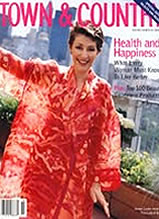
In this Town & Country article entitled “Taking Good Care of Yourself in Your 40’s,” Dr. Darrick Antell discusses how the skin undergoes the most visible changes around the age of 45. To help prevent these negative changes, he recommends moisturizing and using sunscreen, as well as avoiding tanning and smoking. To read more, click the link below.
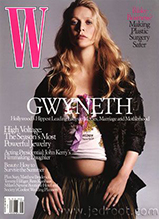
Top NY Plastic Surgeon Dr. Darrick Antell discusses how to pick a qualified plastic surgeon in this W article. With recent high-profile deaths during plastic surgery, it’s important to choose a surgeon with appropriate credentials, proper training, and significant experience. Listening to and following all post-operative instructions is also imperative for reducing the risk of complications. Click the link below to read the full article.

In this Wall Street Journal article, Dr. Darrick Antell discusses how smaller procedures can produce a more natural-looking result, while also being more cost-effective and having a shorter recovery time. He says that having small procedures on a regular basis can help to prevent the need for a “complete overhaul”. To read the full article, click the link below.
In this Elle feature, writer Julia Norwich writes about her experience after receiving a referral to Dr. Darrick Antell. After undergoing eyelid surgery and liposuction, she emerged excited, bruised, slightly embarrassed, and also two sizes smaller. To read more, click the link below.
Dr. Antell was featured in the Pulteney St. Survey for the combination of his incredible skill with his dedication to volunteerism. In his own words, he believes, “It’s important that plastic surgeons contribute to the community. Physicians are in a unique position to provide help.” To learn more about his service, both local and abroad, click the link below.
Selecting a Plastic Surgeon - Leading New York Plastic Surgeon Dr. Darrick Antell has advice on what to look for if you're thinking about a Nip/Tuck and the percentage increases in procedures such as eyelid surgery and facelifts.
In this feature, Dr. Antell gives insight into his unique path to medicine and success story. Despite his extensive list of famous and prominent patients, he’s managed to maintain his “Ohio folksiness”, giving him a down-to-earth attitude that appeals to his patients. To learn more about his story and philosophy, click the link below.

Dr. Antell’s alma mater, the Medical College of Ohio, did a profile feature on his unique path to becoming a plastic surgeon and his work. He talks about how his career allows him to access two diverse worlds: patients in remote areas of the world who need reconstructive surgery and those living on Park Avenue who desire cosmetic enhancements. To read the full feature, click the link below.

Plastic Surgery of the Chin: Interview with Jay Leno - Top NYC Plastic Surgeon Dr. Darrick E. Antell says a lot of men are nervous about losing their jobs and feel a new chin will give them a stronger, more forceful appearance. One of the most popular cosmetic surgery procedures is chin implants.
In this Crain’s article, Dr. Antell discusses his philosophy that “plastic surgery should whisper, not scream.” Despite an abundance of extreme plastic surgery makeover shows, he believes that most New Yorkers want the results of any work to look subtle and natural. To read more about trends in plastic surgery in New York, click the link below.
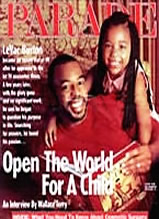
In this Parade article entitled “What You Need to Know about Cosmetic Surgery,” Dr. Darrick Antell discusses how women typically start having plastic surgery in their 30s, while men wait until their 40s. Despite this difference, however, the first procedure usually desired by both sexes is eyelid surgery (a blepharoplasty). To learn more, click the link below.
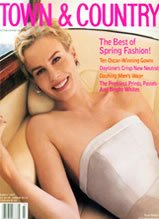
In this Town & Country article entitled “Surgery with a Scalpel,” Dr. Darrick Antell gives insight into a new trend in plastic surgery: the “mini” facelift. In addition to a shorter scar, the “mini” facelift also has the benefit of a shortened recovery period, meaning less downtime. Click the link below to learn more about short-scar facelifts.

Board Certified Top New York Plastic Surgeon Dr. Darrick Antell states there are two most common areas of concern, with people contemplating a traditional facelift or a Mini Facelift.

This BusinessWeek article explores Dr. Antell’s research on the correlation between a strong chin and success in the business world. Presented at the World Congress on Liposuction Surgery and Advances in Cosmetic Surgery in Dubai, Dr. Antell’s work shows how 90% of CEOs from Fortune 500 companies had prominent chins, compared to only 40% of the general population. To learn more, click the link below.
Due to increased sexualization of the American male, more men are becoming self-conscious of their body image and turning to plastic surgery to help rid them of excess fat. Dr. Darrick Antell, a top New York Plastic Surgeon, says that he does several liposuction procedures each week on men who desire a chiseled chest and stomach. To read the full article, click the link below.

This Departures article entitled “Botox or Bust” traces the rise in popularity of Botox in the beauty business- a stark departure from its original use as a deadly poison for biological warfare. Writer Amy Young discussed the use of Botox with top New York Plastic Surgeon Dr. Darrick Antell and even witnessed its injection into one of his patients. To learn more about how beneficial Botox can be for people of all ages, click the link below.

This MSNBC article entitled “Young and Using Botox to Stay that Way” looks at the trend of younger patients making Botox part of their regular beauty routine. Dr. Antell discusses the increased awareness of Botox among younger people, describing Botox as a preventative method to discourage the formation of wrinkles. To learn more, click the link below.
This BusinessWeek article discusses the growing popularity of Botox among men. NYC Plastic Surgeon Dr. Darrick Antell talks about how many of his male patients, including CEOs, feel that it helps them to put their best foot forward in the business world. Click the link below to read the full article.
In this Crain’s article, Dr. Darrick Antell discusses the increasing number of men who choose to get plastic surgery. Having treated a number of high-powered executives, he understands the pressure that CEO’s feel to look physically fit and up to the job. Through procedures such as a chin augmentation or a blepharoplasty, plastic surgery can produce small changes that dramatically enhance a patient’s overall appearance. To read the full article, click the link below.

This Good Morning America feature looks at how more men are undergoing the knife to compete better personally and professionally. Top NYC Plastic Surgeon Dr. Darrick Antell offers insight into this, noting that it likely stems from an increase in publicity about plastic surgery and new methods that allow for less invasive procedures. He also discusses the importance of being aware of risks and picking an experienced, board-certified plastic surgeon. To read the full article, click the link below.

In this Newsweek article, Dr. Darrick Antell discusses how people’s opinions about cosmetic surgery have changed, with plastic surgery no longer viewed as feminine. As a result of this, and of the premium placed on looks in America, more men have begun to undergo plastic surgery to retain a youthful appearance. Click the link below to read the full article.

In this Family Circle article written by Ellen Sherman, Dr. Darrick Antell discusses the increasing number of teens choosing to undergo plastic surgery. He says that, for teens unhappy with their natural appearance, plastic surgery can help to relieve psychological discomfort. However, he believes it’s important to be cautious before proceeding with a procedure for teen patients, outlining questions that are important to ask. To read more, click the link below.

NYC Mini Facelift Plastic Surgeon Dr. Darrick Antell at Lenox Hill Hospital discusses how identical twins age differently and Mini Facelifts can help Twins dramatically look more alike once again.
Twins, Aging and Plastic Surgery with Diane Sawyer - NYC Park Avenue Cosmetic & Reconstructive Surgeon Dr. Darrick Antell talks about his study on twins and how with genetically identical people we see changes in the way they age.

Dr. Darrick Antell’s study comparing full and short-scar face-lift incisions in identical twins was published in the renowned Journal of Plastic and Reconstructive Surgery. Although there was no visible difference between the two techniques at short-term follow-ups, he found a significant difference in the neck region at long-term follow-ups. Specifically, there was a decline in the average score given to the neck area for the short-scar face-lift method. To read his entire groundbreaking study, click the link below.

Dr. Darrick Antell’s study comparing four face-lift techniques in identical twins was published in the renowned Journal of Plastic and Reconstructive Surgery. He found that the different techniques had similar results when performed on the appropriate patient, meaning that there is no one “best” face-lift technique. To read his entire research study, click the link below.
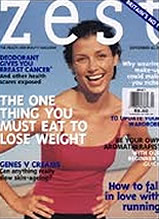
In this Zest article entitled 'The Top Seven Threats to Your Skin,' top New York Plastic Surgeon Dr. Darrick Antell provides insight into how smoking and stress accelerate the aging process. Based on his groundbreaking research with identical twins, he discusses how both smoking and stress reduce blood supply to the skin, resulting in diminished skin quality. Click the link below to learn more.

This piece from Good Morning America features Dr. Darrick Antell for his unique expertise in performing plastic surgery on identical twins. It discusses the process that twins Annette and Jeanette underwent after deciding to have their facelift operation done with Dr. Antell. Having conducted groundbreaking studies using identical twins, Dr. Antell provided insight into how sun, stress, and smoking affect the aging process in identical twins. To learn more, click the link below.
Leading New York Plastic & Reconstructive Surgeon Dr. Darrick E. Antell speaks about his study on identical twins recently published in the Annals of Plastic Surgery that showed lifestyle choices and environment can play a role in the rate at which we age, and even slow the aging process.

In this Los Angeles Times article, author Rosie Mestel discusses studies presented at the annual meeting for the American Society for Aesthetic Plastic Surgery. In doing so, she looks at Dr. Darrick Antell’s journey to becoming an expert on plastic surgery in twins, which started when he attended a festival in Twinsburg, Ohio. Studying identical twins, he found that sun, smoking, and stress adversely affected the aging process by reducing blood supply and damaging collagen and elastin. To read the full article, click the link below.
Fifty-seven-year-old identical triplets were inspired by a story that they saw right here on the TODAY show, so they looked into getting plastic surgery, and they decided to go for it with New York's leading Plastic Surgeon Darrick E. Antell, M.D.

Writer Sophie Dowling interviewed board-certified plastic surgeon Dr. Darrick Antell for tips on how to age gracefully. His advice for keeping wrinkles at bay was to avoid the 3 s’s (sun, smoking, and stress) and to indulge in a sufficient amount of sleep. He also believes in starting preventative measures, such as Botox and fillers, early to help maintain a youthful appearance. To read more of his advice, click the link below.

In this Huffington Post article, writer Janet Carlson discusses consulting top Plastic Surgeon Dr. Darrick Antell when diagnosed with an evolving melanoma. To learn more about her experience, click the link below.

In this Gossip Girl novel, Dr. Antell is featured for having refreshed the appearance of one of the characters. To see his appearance in this iconic pop-culture book, click the link below.

In this New York Observer article, Dr. Darrick Antell provides insight into the use of minimally-invasive injectable to freshen an appearance. He describes the difference between fillers such as Restylane, Radiesse, Juvederm, and Sculptra, as well as a newly trending injectable, Evolence. Click the link below to read the full article.

Dr. Antell was quoted in Esquire Magazine regarding advice on body contouring, body sculpting and liposuction. Click below to read the article.
Dr. Antell was quoted in Esquire Magazine regarding how to fix under-eye bags for good. Click below to read the article.